Wednesday, April 10, 2019

Ben Carson: A Chance at Life


If you know our family, you know that we love reading and that books are some of our favorite review items. My kids enjoy reading for a while each day on their own as the foundation of our education is literature, but they especially love when my husband or I read aloud to them. We read all sorts of books, but we've all grown to love biographies. We like reading about the lives of people, knowing that that events actually took place. The kids are fascinated to study the actions, vocabulary, foods, dress, and thinking of past periods and seeing they ways in which our lives differ.

The books from YWAM Publishing are our favorites for biographies, and I often recommend them to others. We like them so much, in fact, that we own over 30 of their books from various lines including the Heroes of History, the Christian Heroes: Then & Now, the Heroes for Young Readers, and even a couple of their audiobook biographies. One might think that we wouldn't be excited to receive another one of these books, but my kids were thrilled to choose another title. This time, our study of the past didn't take us back hundreds of years. Instead, we learned about an influential person still living in Heroes of History - Ben Carson: A Chance at Life by Janet and Geoff Benge.


 As I listed off names for the kids to choose, I came to Ben Carson. "Who's that?" they asked. I read aloud the description for the book on the website to whet their appetite. By the time I finished, all the kids decided they needed to know more. What made his story even more intriguing to them is the fact that Ben Carson grew up about 30 minutes away from where we live.

The book begins at a pivotal time in Ben Carson's life. His father had just left the family, leaving his mother to raise him and his brother alone. They lived in a poor section of Detroit, but his mother was determined to make a better life for the family. She worked three jobs, moved out of state with family for a time to save money, and was willing to work hard. She taught her boys a strong work ethic, too, and insisted that they turn off the television and spend their time reading instead of filling their days with mindless entertainment. Consistently reading two books a week and writing reports along with being fitted for glasses, made an improvement in Carson's education. His grades began to soar as he rose to the top of every class.

Carson continued to put his all into his studies as he worked through the JROTC (Junior Reserve Officers' Training Corps) program, attended Yale University, and excelled at his temporary summer jobs. He got married, finished med school, and started a family.


During his residency years, Carson became intrigued by brain surgery and was eager to simplify the process. Where others saw challenges, he saw opportunity. He used X-rays to quickly locate the foramen ovale, preformed a lobectomy to save a man's life, and studied brain tumors through New Zealand white rabbits and MRI machines.

Carson preformed many well-known surgeries including separating multiple conjoined twin sets and many brain hemispherectomies. He became greatly revered, not only in his specific medical field, but also for his advocacy of education. He traveled for both passions--to various countries to preform surgeries and all across the United States to speak at schools and rallies. He has influenced many and saved countless lives. His work ethic, dedication to education, and dependence on God has made him a role model for all.


Along with the book, we received the digital unit Study Guide. The guide helps to further your study including geography, social studies, and history, to name a few. It designed to benefit all learning styles, group and individual study, and a wide range of ages.

The guide includes the following:
  • Key Quotes - seven well-known quotes that can be used for memorization, understanding meaning, and displays
  • Display Corner - a list of objects, books, and photographs from Carson's life and places he lived that could be gathered and displayed to bring life to learning
  • Chapter Questions - six questions for each chapter: vocabulary, factual, comprehension, and open-ended interpretation (answers are at the end of the guide)
  • Student Explorations - essay writing, creative writing, hands-on projects, audio/visual projects, arts/crafts 
  • Community Links - meaningful field trips, guest speakers, service projects
  • Social Studies - reproducible maps, geography, terms/vocabulary, timeline, conceptual questions, 
  • Related Themes to Explore - history, science, literacy, music, military, popular culture
  • Culminating Event - project displays, cultural food, music, activities, oral presentations
  • Books and Resources - books, movies, documentaries, National Geographic articles, websites


The kids and I always enjoy the deeper study that comes from using the unit study guide. There are many different activities that reflect a wide range of learning styles, so there's something that appeals to everyone. Because there are so many options, it would be difficult to use the entire study. One thing that we always do with these studies is discuss the comprehension questions at the end of each chapter. It helps to review the story and understand it more fully. We especially enjoy the vocabulary review. Words like immaculately, quell, meticulously, abolished, and intractable are some of the words that are highlighted.
   
To further our study, we experimented with one of our chemistry sets, practiced suturing after a surgery by sewing felt, observed various objects through a microscope, filled in a map of Michigan, researched more about lobectomies and conjoined twins, and had many conversations on the importance of education. Some of the other activities we would like to incorporate include creating a model of the brain with clay, drawing a map of Australia or South Africa, write a Proverb in calligraphy, and read one of the books written by Carson himself. There are many other activities, projects, and ideas to supplement the learning.


To say that we enjoyed this book is an understatement! I have read many of these biographies from YWAM Publishing and this is easily my favorite one. There are many life lessons that are underlying themes throughout the entire book: don't judge a person by their looks, you can change your circumstances through hard work, reliance on God is crucial, reading and education are keys to a successful life, and more. My kids and I had many good conversations while reading this. I especially love how much attention was made to reading. Literature is a huge part of our education. It was encouraging to point out to my kids how important it is to someone as successful as Ben Carson, as well.

There are some intense sections of the book, such as step-by-step details of surgeries. My daughter left the room during one such description of a hemispherectomy as it spoke about drilling into the skull, cutting through skin and tissue, removing pieces of the brain, and dealing with extreme blood loss. The boys, however, were fascinated. In fact, one of them was so enthralled with the story that he asked to reread it himself as soon as I finished reading it to them. 
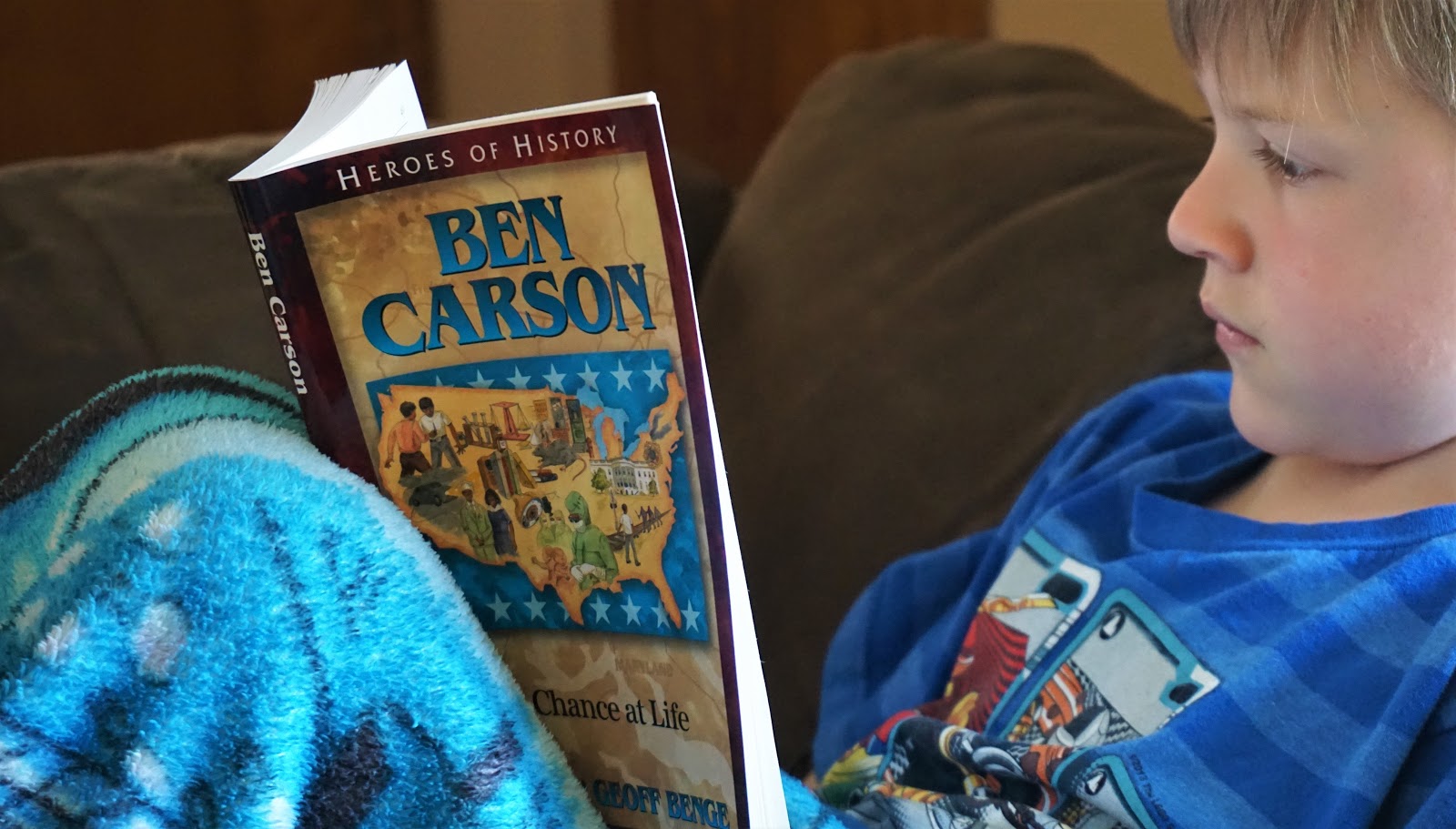

Heroes of History - Ben Carson: A Chance at Life has motivated us to learn more about the surgeon with "gifted hands." We are inspired to read one of his books to study deeper about his philosophies and put them into practice.

Until then, we'll remember the poem his mom quoted that shaped his life:

If things go bad for you
And make you a bit ashamed,
Often you will find out that
You have yourself to blame.
Swiftly we ran to mischief,
And then the bad luck came.
Why do we fault others?
We have ourselves to blame. 
You can connect with YWAM Publishing on the following social media sites:


You can read more reviews of more great books and study guides offered by YWAM Publishing on the Homeschool Review Crew blog.


Crew Disclaimer
Pin It

Friday, April 5, 2019

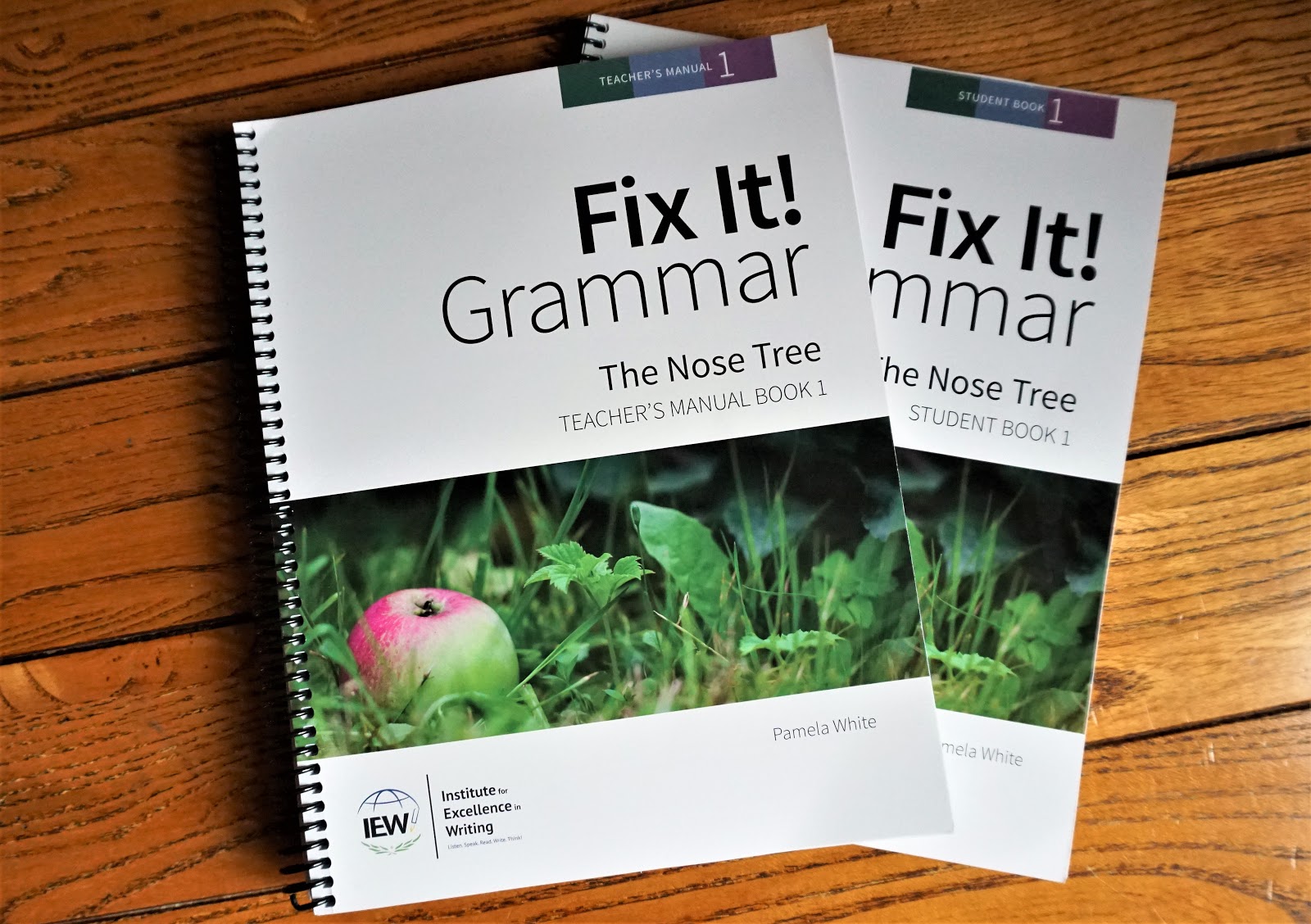
Fix It! Grammar


When my oldest child told me years ago that Fix It! Grammar was his favorite part of his school day, I knew I found a winning grammar curriculum. I was thrilled to have the opportunity to review it again with another child.

It might surprise people that we don't focus on a great deal on grammar curriculum. After all, I do have an English major, taught high school English classes before my homeschooling days, and truly love the language. However, my kids spend a large portion of their school day reading literature. Doing so, they naturally learn proper sentence structure, writing styles, and enriched language skills. I like to teach parts of speech in a fun, gentle way by incorporating games like Mad Libs into our days. Still, I do believe it is important to have some formal grammatical instruction to supplement their learning. I have tried a few different curricula, but none seem to fit my style of teaching like this Fix It! Grammar book from Institute for Excellence in Writing (IEW).    


IEW is known throughout the homeschooling community for their exceptional writing materials. Their mission is to equip parents with methods and materials to help their students become confident and competent communicators and thinkers. Their teaching style has been proven to be effective for all ages and levels of ability. 

What I personally love about the Fix It! Grammar curriculum is that it is not a traditional program. Instead of learning a rule and then practicing it in a bunch of random sentences, students work through a fairy tale bit by bit. This method of tackling real-life sentences with limited instruction, teaches students to think about their writing and apply the grammar rules to their own work. This method gives the student a better understanding of the material, helps him to retain the knowledge, and gives the assignments a sense of purpose.

Another aspect that makes this curriculum unique is that the student gets to be an editor. As he works through each lesson, he looks for the mistakes and corrects them, along with marking specific notations such as parts of speech, phrases, and clauses. As he progresses through the lessons and learns more grammar rules, the sentences contain more errors. By the end, he will also be able to mark the part of speech for nearly every word in the story.


For the curriculum, you will need a copy of The Nose Tree Student Book, a spiral notebook, an envelope or the like to hold the review cards, and the Teacher's Manual. The purchase of the Teacher's Manual includes a downloadable Student Book, but there is also the option to purchase a printed, spiral-bound book, as well.

The set-up for the teacher is simple. Prepare the spiral notebook with the two sections (one in front for the rewrite of the story and one in back for the writing of vocabulary), cut out the appropriate review cards (in the back of the student book) for the week, and teach new concepts at the beginning of each week.

So, how does it work? The student is given one sentence of the story each day. There are multiple things that he does with that one sentence:

  • Look up the bold word in a dictionary and write in the vocabulary section of the notebook which definition best fits the story  
  • Mark and fix the sentence, using the review cards as reminders
  • Rewrite the sentence in the rewrite section of the notebook

New grammar cards are added each week. For instance, week 1 starts with the indent paragraph symbol (¶), nouns (n), homophones and end marks. Week 2 adds articles (ar), week 4 adds quotations, and so on. 

To put it in perspective, here is the sentence for day 1, week 1:

¶ Did you ever hear the story of the three poor soldiers

  1. The first thing the student does is look up the bold word and write it and the best definition in the vocabulary section of his notebook. My daughter wrote down poor: lacking sufficient money.
  2. The second thing is to mark the sentence, using the grammar review cards. She put an n (noun) above story and soldiers. She also put a question mark at the end of the sentence.
  3. The final thing is to rewrite the sentence in the rewrite section of the notebook, remembering to indent because of the paragraph symbol. 

As a comparison, here is a sentence from the final week of the book:

the doctor put on the cloak, wished the king and his court farewell, and was with his to/two/too companions directly 

Here, the student needs to start a new paragraph in the rewrite based on there being a new topic in the story instead of following the paragraph symbol, knows to capitalize the first word, can choose the correct homophone, will put an ending period, and should be able to mark the part of speech for every word.

The process should take about 15 minutes a day, 4 days a week for a total of 33 weeks. The course is intended to be a teaching tool, and not graded assignments as the parent should be modeling the editorial process and helping the student as needed.

We are currently halfway through week 5. Of course, the sentences have already gotten a little longer and more complex. Along with nouns, my daughter can also recognize articles, pronouns, and who-which clauses. She has also learned rules about quotation marks. 

The spiral-bound Teacher's Manual makes the material simple to teach even if you personally struggle with all the crazy, irregular rules of the English language. The format is easy-to-read, and the directions are clear. There are also many notes throughout the lessons that include teaching tips, advanced words that haven't been taught yet, and various other concepts. The back of the book contains a scope and sequence and a glossary which includes in-depth descriptions of parts of speech, sentences, clauses, phrases, punctuation. additional rules and concepts, and stylistic techniques. 


The Nose Tree is the first book in the Fix It! Grammar curriculum which is intended for 3rd-12th grades. Because the remaining 5 books in this set require this foundational book, it is reccomended that students start with The Nose Tree, though there is an optional placement test your student can take.

My daughter is in 5th grade. Since this is her first experience with Fix It! Grammar, I started her at the beginning. She find the lessons simple and could probably finish the entire book in a few weeks if I let her. She likes writing her own stories and is a voracious reader. Naturally, she is thoroughly enjoying working through this fairy tale and rewriting it. But her favorite part? The vocabulary. She gets excited every day when she sits with her giant dictionary and searches for her word. Queried, divulged, forlorn, pitiable, pilfered, laden, and stoutly are some of the rich vocabulary that is highlighted. I love hearing her incorporate these new words in her everyday speech. 


When I first told my girl that Fix It! Grammar was coming, she was somewhat disappointed, because she didn't want "extra" work. She was hooked from that very first lesson though. Just like her older brother, she says that the book is fun and is the first subject she completes each day. 

Here's what she told me about the curriculum:

"I like that it has a story that I work through instead of just random words. Oh, and I love the vocab!"


The Fix It! Grammar series from Institute for Excellence in Writing (IEW) is a fantastic grammar curriculum. I have used this first book with 2 of my children successfully and was reminded how much I am impressed with it. In fact, I am planning to continue through the series with my oldest kids and soon start my 9-year-old in The Nose Tree using the downloadable Student Book that came with my Teacher's Manual.   

If you're looking for a curriculum that truly works and is applicable to both grammar skills and writing skills, Fix It! Grammar is highly recommended. 


You can connect with IEW on the following social media sites:


Make sure to head to the Homeschool Review Crew blog to read more reviews of the different books in this curriculum. 


Crew Disclaimer
Pin It

Friday, March 22, 2019

60+ STEM Challenges


Our family thrives on hands-on learning! Whenever we get the chance to review materials that get us physically working to learn gets us excited. You can often find a random experiment jar on the counter or a project on a table or a child or two working to complete a fun challenge. I am a firm believer that people learn better when they do and try to incorporate that philosophy into the upbringing of my children.

When we're not actively learning though, we focus on literature. We spend a large portion of our school day reading. I've explained many times that our education is literature-based with an emphasis on hands-on learning. So combining the two means of learning like Tied 2 Teaching has done with their STEM Activities, Full Year of Challenges with Close Reading seems pretty perfect to me. 


Matthew Kelly, founder of Tied 2 Teaching, has been teaching in the classroom for years. He has created over one thousand materials to be used with students PreK-8th grade, ranging from language arts to character development to geography and more. His passion for math and science education inspired this collection of seasonal STEM Activities. He and his wife also homeschool their 4 little ones.

Are you familiar with STEM? It's all about science, technology, engineering, and math. Focusing on these topics encourages problem-solving and innovation, aids in the application of knowledge, and fosters a love of learning. This STEM Activities bundle comes as individual downloads that can be divided by month to keep kids active and learning all year long. The exercises are seasonally matched and include extra fun "holidays" like a droid challenge in May to celebrate "May the 4th" for the Star Wars fans, a pencil tower challenge in September to celebrate "back to school," and a hat for cat challenge in March to celebrate both Dr. Seuss' birthday and National Reading Month.


For example, here is what you can find for Easter and Earth Day in the month of April:

  • Jelly Bean Tower 
  • Design a Carrot Carriage
  • Design Something Useful
  • Upcycled Birdhouse

Each challenge begins with an online close reading text (short, high-interest reading passage). The reading can be accessed through a QR code, a link in the download, directly on the site (which also contains ideas for additional activities and links on the subject), or a printed copy. There are a handful of questions to help students better grasp the materials and get them to think. Questions about definitions and synonyms are straightforward, but others asking "Why do you think . . ." and "What sentence in the text supports your answer" can vary greatly. 


Next, the student is introduced to the challenge. There is criteria, material suggestions, the final product requirements, and pictures examples from Matthew's own students. 

It's always good to have a plan. Before the student gets to creating, he can write out his ideas. There are a few different page format options that give space to write, draw, and solve. What do you already know about (insert challenge)? What will it look like? Explain its design. What is one way you could make it even better? Of course, there is also a space to draw a sketch. 

Next is the fun part--completing the challenge! This can take as little as 30 seconds (like the Eiffel Tower challenge) or as long as you have the time, patience, and interest for. With homeschooling, we have the flexibility to work as long as we like. Some challenges took 10-15 minutes, while others lasted an hour or so. As long as there is interest, we keep working. Obviously, things that are painted or glued will take a longer time from beginning to end to complete. 


After the challenge itself is completed, there are follow-up pages. The student is asked to list the steps he took to meet the challenge, explain why or why not his design was successful, describe which parts went well, and so on. There is also a page for him to recognize how each aspect of STEM was included in the challenge. Each question is meant to strengthen thinking skills.  

Just as I suspected, my kids love these challenges! We complete at least one challenge a week together as a family, but use them as one-on-one time when a child is needing something extra to do, too. The challenges are geared toward grades 3-6. I have kids both older and younger than the recommended ages. My little ones need some extra help and my middle schooler is a bit advanced for some of the activities, but overall, this is a great resource that can be adapted for all ages. 


I have been reading the close text aloud and discussing the material with the kids. I love times like this as it always encourages further study, like looking up ticket prices for going up into the Eiffel Tower or researching shipwrecks and their locations. The information in the download is both a great starting point for a full study and a great stand-alone product. I love that each challenge can also supplement additional studies, like last month when we were learning about spiders and included the spider challenge from here.

My kids love the open-ended challenges, as they get to show their creativity. It's so fun to watch their minds work and how each one is different. We have been discussing the questions and thinking activities aloud together, but I can see how students could benefit from writing out their answers.

I love how their personalities shine through in their designs, too. For instance, during the Design a Treasure Chest challenge, my 9-year-old said, "I'm going to make one really, really, really big. Because what I want to put in it is you!" And then, because he couldn't keep me in a box, he made one to hold a picture of me from high school that he keeps framed next to his bed.


We haven't worked through all of the challenges, but we have found a mistake. The close reading in the Construct the Eiffel Tower directs to the reading for the Design a Zip Line. However, it is easy to search for Eiffel Tower on the site and the correct reading comes up. It is the same as Design a Building Block Structure, but the close reading questions are different for the two challenges.

We are greatly enjoying these STEM Activities, Full Year of Challenges with Close Reading. I appreciate the variety of activities that are included and love the addition of the close reading texts. This resource perfectly sums up our schooling style. I can't wait to see what other fun things we'll do throughout the year.


You can connect with Tied 2 Teaching on the following social media sites:
Facebook
Instagram
Pinterest


You can find various other STEM challenges included in the download by reading more reviews on the Homeschool Review Crew blog.

Crew Disclaimer
Pin It

Thursday, March 21, 2019

Things That Make Me Smile 10/5/18

Jake (12 1/2), Alyssa (10 1/2), Zac (8 1/2), Tyler (6 1/2), Nicholas (3 1/2)


This week, we had game schooling, science class with our city, and baked some yummy fall treats.


1. Zac: "Mom, I want to name all my kids names from the Bible. Unless I have 5 kids--4 boys and a girl. Then I want to name them after the Nexo Knights." (LEGO)

2. Tyler, after eating breakfast: "I'm stuffed. May I have water with no ice, please?"
Me: "No ice?"
Tyler: "Because water with ice just makes me stuffed-er. Water with no ice makes more room in my tummy. Somehow."

3. Alyssa: "Why do you think the Bible is true?"
Zac: "Because I was taught that and who would make up such cool stories?"

4.

5. Jake: "Can we hang this poster in our room, please? If you say no, that would be so cruel."
Me: "Cruel is my middle name."
Jake: "Mom Cruel Leaf."
Me: "Yep, that's it. Though I didn't realize Mom was my first name."
Jake: "It is now that you have kids."

6. Nicholas, watching Alyssa draw: "Very impressive."

7. Jake: "Hey, Mom, don't you like my giant ribs? I worked hard to get them to stick out like this."
Me: "You worked hard at not eating?"
Jake: "Trust me, with your cooking, that is hard!"

8. Nicholas, going potty: "Mama, I am killing the bubbles!"

9. Jake: "Mom, I'm going to tape Nicholas up."
Nicholas: "Yeah, like my mouf! So I can't talk!"
Me: "And you're excited about this?"
Nicholas: "Yeah!"


What made you Smile this week?

Pin It

Wednesday, March 20, 2019

Drive Thru History® ~ Acts to Revelation

Two years ago, our family was introduced to Drive Thru History® and immediately fell in love with both the style and the content. We were thrilled when we recently received Drive Thru History® "Acts to Revelation" DVD set and study guide to review. These videos are a fantastic way to learn history and the Bible and are a favorite in our house. Besides, what kid doesn't want to "watch TV" for school, ha.

Dave Stotts, the host of the award-winning television series Drive Thru History®, has been involved in professional video and media production for two decades. In 2004, he began driving "thru history"  to bring the past to life in a fun and unique way. Using storytelling as the driving force behind his work, he creates engaging videos that are full of content. Our family is learning while being entertained.


The company is not simply about entertainment though. We have learned so much about the lives of the first Christians and the events that took place as the disciples and missionaries helped spread the gospel across the land through the midst of persecution.

The videos are divided into 18 episodes on 3 discs and cover over 8 hours of material.

  • Episode 1: The Gospel Shared at Pentecost
  • Episode 2: The Church Grows in Jerusalem
  • Episode 3: The Gospel Spreads to the Gentiles
  • Episode 4: Saul of Tarsus & the Road to Damascus
  • Episode 5: Paul's First Missionary Journey--The Island of Cyprus
  • Episode 6: The Journey Continues--Pamphylia, Galatia, & Asia Minor

  • Episode 7: The Jerusalem Council & Paul's Second Missionary Journey
  • Episode 8: The Second Journey Continues--Philippi & Thessalonica
  • Episode 9: A Road Trip to Athens
  • Episode 10: Ancient Corinth
  • Episode 11: Paul's Third Missionary Journey--Ephesus
  • Episode 12: Paul's Final Trip to Jerusalem & Caesarea

  • Episode 13: Adventures at Sea--The Island of Malta
  • Episode 14: A Final Journey to Rome
  • Episode 15: The Martyrdom of Paul & Peter
  • Episode 16: John & the Island of Patmos
  • Episode 17: The Seven Churches of Revelation
  • Episode 18: The Book Closes on the New Testament Period


Each episode showcases multiple ancient sites that are still preserved today. Temples, cities, the remains of a market, amphitheater, stadium, catacomb, and possibly one of the first and oldest churches. We learned about the oldest functioning harbor in the world and one of the oldest inhabited cities. Dave travels all over the region and visits cities including Cyprus, Tarsus, Jerusalem, Lystra, Philippi, Gaza, Antioch, Ephesus, Colossae, and many more. He drinks coffee 1,165 feet above sea level, devours a full Turkish meal (of course, my kids still laugh at Dave's obsession with cheese from prior episodes, ha), purchases handmade soap, and examines an ancient latrine. There is also a captivating demonstration of throat singing, which prompted our family into a further study of the art.

Because the series weaves in stories and facts from the time period that are not recorded in the Bible, other historical figures are mentioned, like Pompeii the Great, Marc Antony, Octavian, Cleopatra, Sergius Paulus, Josephus, and others. I loved when my 9-year-old blurted out, "Marc Antony and Octavian? I read a Shakespeare book about them!" It's always exciting when the pieces fall into place.

I love this view of an ancient road of Gaza flowing into a current road.
It's a perfect application of this series applying the past to the present. 

Dave recites Scripture (though not the version we personally use) and references ancient quotes throughout each episode. He explains the culture during this time and shows how the rule of the Romans influenced the people. Dozens of paintings and illustrations that depict the stories are shown throughout each episode. Dave makes it easy to visualize Saul's encounter with God on the road to Damascus or Paul and his companions as they were persecuted by the people or John as he wrote the book of Revelation on the island of Patmos. The stories come alive.


"The Bible is not just made up stories. 
It is a documentation of real people in real places 
who live very real lives." -- Dave Stotts


Included with the 3-DVD set is an accompany study guide. It is broken down by disc and episode. The format is consistent for each episode: a Bible quote, summary of the episode, a list of discussion questions, corresponding Bible passages, and an additional tidbit of information or "side road." The pages are covered with additional art and photographs. There is an answer at the very back of the booklet. My kids are enjoying looking at the various pictures and reviewing the topics of discussion. The study guide itself is attached to the middle of the DVD case. While I appreciate the fact that my little ones cannot misplace the booklet, it does make it somewhat difficult to use. I would rather have the guide printed as a separate book that could be placed in a sleeve in the case.


It is always fascinating to me to see how the Bible and other historical events line up. Though I know that the Bible is fact and the events truly happened, it can be difficult at times to see how everything comes together. Drive Thru History® has done a phenomenal job of portraying the chronological telling of biblical stories mixed in with information from other resources. There is so much information that we could watch this multiple times and still not remember it all.

While some documentaries can be dry and boring, Drive Thru History® is fun, exciting, and entertaining. It is appropriate for the whole family and is an excellent educational resource.


You can get a taste of Drive Thru History® "Acts to Revelation" by watching this trailer.


You can connect with Drive Thru History® on the following social media sites:


To see how other homeschool families used these resources, please read the reviews on the Homeschool Review Crew blog.


Crew Disclaimer
Pin It

Friday, March 15, 2019

Art of the Ancients


My daughter loves whenever we get to review anything art-related. She is the crafting queen and has built her repertoire of skills throughout her 10 years of age. Whether she's knitting or embroidering, drawing or painting, designing capes and masks for her brothers and even twisting balloon animals, you can daily find her sparking her creativity in one art form or another.

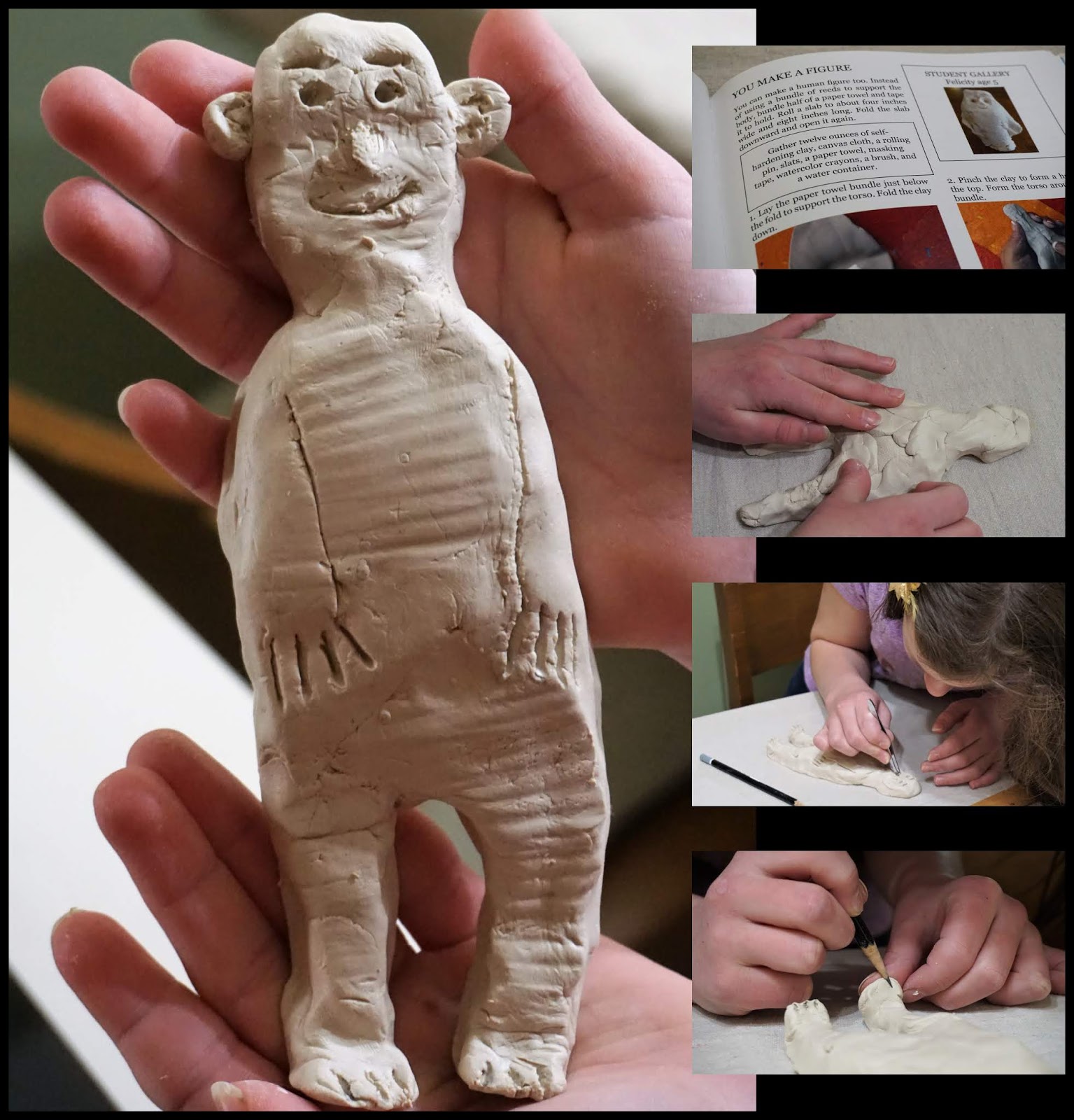
One medium she did not have much experience with though was clay. Oh, sure, she's made her fair share of play dough creations, but she wanted the satisfaction of working with a firmer substance and having the opportunity to preserve her achievements. When I saw that we could chose a book from ARTistic Pursuits Inc. art curriculum, I immediately looked through the K-3 Grade Level, Volumes 1-8 to find one heavy in clay creations. 


ARTistic Pursuits was developed by Daniel and Brenda Ellis in 1999. What began as a single drawing book for high schoolers has evolved into full curricula from preschool all the way through high school. Their goal is to "develop experiences in the visual arts that allow children to create original works of art." Their program is designed to help students understand art concepts and enjoy the process of putting their own ideas and visual images on paper.

The Art of the Ancients, K-3 Volume 2 is the second book in the kindergarten to third grade art program. This curriculum currently contains eight volumes. It is a four-year elementary course with one book for each semester and one lesson per week. Once your child finishes the first book, Art for Children, he can either work through the others chronologically or choose to study the various time periods of art in any order.


The books are hard cover and include both a Blu-ray and DVD with additional lessons. They are filled with many illustrations, from photographs of original art to recreations to examples from young children.

This specific book includes 18 projects. They are broken into 12 text lessons and 6 video lessons. The study focuses on cultures that developed around the Mediterranean Sea and its tributaries. Students will learn about European cave drawings, Egyptians murals, Mesopotamian relief carvings, Greek pillars and pottery, and more. Children are encouraged to see the world in new ways and express their ideas.


One thing that I love is that each text lesson begins with a history of the particular project. These sections are bursting with information, not only the art aspects such as materials, types, purposes, and importance, but also facts about pyramids, people, nature, clothing, transportation, ways of living, and more that can be gleaned from studying the ancient art. The student is encouraged to examine the ancient art examples and strengthen his observation skills as he answers a few questions designed to get him to see more within the picture.

After this brief history lesson, the student will recreate his own version of the project by practicing the art form. Detailed step-by-step direction are given, clearly numbered with accompanying pictures. Each lesson also includes a supply list and prep notes when needed.


The video lessons are given in both DVD and Blu-Ray versions. There is a single page in the book for each of these lessons. It shows the name, a picture of the project, a list of supplies, and a simple description.

The videos themselves begin with a brief introduction before moving on to the instructional portion. Then, the student can watch Brenda as she creates the projects in real time. The steps are easy-to-follow with audible directions. The video is zoomed in to show the hands close up, so the student can see exactly how each step is preformed.

The end of each video is a re-cap of the project. A portion of each step is shown with text instructions on the screen.


While my daughter is the one with the art obsession, her younger brothers enjoy crafting from time to time, as well. As she's been working through the book, the boys join in on the crafts they find interesting. Even the 4-year-old is enjoying these lessons so much that he made a project on his own. I've been letting the kids choose which projects to complete as they wish. They have drawn watercolor portraits, crafted a clay statue, formed multiple pinch pots and other formations, designed mosaic pictures, and created relief art.

We were able to use some supplies like watercolor crayons and watercolor paper from when we studied the Art of the Middle Ages with ARTistic Pursuits last year, but they were all excited when we bought a 5-lb container of clay to add to our materials. They couldn't wait to break off a chunk and start molding.

I thought for sure that the little ones would only want to play with the clay and make whatever they wished, but I was surprised at how engaged they were in following the directions, both in the book and the videos. (Of course, there was much free play, too!) The kids watch the videos on the computer so they can create their projects while they watch and pause the instruction, as needed.


Not only are my kids learning new skills and bits of history, but they're having fun while doing it! The curriculum is easy to use, too. In fact, the kids can make the projects completely on their own by following the instructions in both the text and the videos. It's geared toward the K-3 grade range, but even my 5th grade, craft-loving girl is excited to make the projects and is interested in the historical facts and art instruction.

Studying the Art of the Ancients with ARTistic Pursuits Inc. has been greatly enjoyed in our home.


You can connect with ARTistic Pursuits Inc. on the following social media sites:
Facebook
Twitter
Instagram


You can read more reviews of this volume along with the other books in the ARTistic Pursuits series on the Homeschool Review Crew blog.

Crew Disclaimer
Pin It

Friday, March 8, 2019

Homeschool Complete Unit Studies


I am excited every time we get to review unit studies. I love fully immersing ourselves in a topic and applying its concepts in every subject area. This comprehensive method helps you learn more, retain it longer, and have fun while doing.

I was recently introduced to Homeschool Complete, who not only produces Unit Studies, but offers complete year-long curricula, as well. The author of the materials, Debra Arbuthnot, has 27 years of teaching experience including public, private, and homeschool education. Her curricula are designed to not only teach facts but also instill higher-level thinking and problem-solving while helping you to confidently teach your child. 

We were able to choose multiple studies from her collection. I picked two studies from the kindergarten-second grade section and two studies from the third-sixth grade section.

  • U.S. Symbols
  • John Adams
  • Parks
  • Spiders


Each study includes an introduction; table of contents; teaching procedure; skills list; materials list; all worksheets, charts, and flash cards; and book list. Each lesson gives detailed, step-by-step directions and is written so that anyone could easily teach the material.

The U.S. Symbols unit is a 4-day study that covers the Liberty Bell, the American flag, the bald eagle, and the Statue of Liberty. It encourages a love of country and an appreciation for our Christian foundation. There are various skills covered, but we were especially drawn to the activities: a construction paper star mobile, a play dough reconstruction of the Statue of Liberty, tic-tac-toe bean bag game, and graham cracker fractions.

Our family loves learning history and being able to spout off random facts. The kids were excited to learn which Bible verse is on the Liberty Bell, our flag's birthday, why the eagle is called "bald," and how many years it took to build the Statue of Liberty. One fact that my oldest son expected to be included in the study was the misspelling on the Liberty Bell. We did a little additional research to see how that could have happened and got an extra history lesson in the process.


The John Adams study teaches about our second president in 4 lessons. The main literature selection is Horrible Harry Moves Up to Third Grade with each lesson reading a portion of it. There are a couple other reading selections along with informational paragraphs about the president throughout the study. Students practice compound words, learn about the election process, write a cinquain, learn a patriotic song, create a poster for a protest, make a paper plate clock, exercise muscles, play a variation of red light green light, and more.

My kids enjoyed learning things such as how the Vice President was originally chosen, how Abigail Adams contributed to our historical understanding, and where the Battle of Bunker Hill took place. 


The Parks unity study is 4 lessons. Each lesson focuses on a well-known National Park. It covers skills such as identifying locations on a map, skip counting, matching antonyms, writing abbreviations of the months of the year, practicing onomatopoeia sounds, finding the area of objects around the house, and more. It also includes activities such as leaf-rubbing designs, making and flying a kite, making a geyser, and taking a hike.

Our favorite parts of the study were the informational sections on each of the Parks. We learned things like when the National Park Service was created, how many states have National Parks, which is the most-visited Park (our family loves visiting there!), the goal of the Parks, how often Old Faithful shoots water, what Yosemite National Park is known for, what the walls of the Grand Canyon are made of, and other interesting facts. We love to go hiking and geocaching as a family, so this study was a favorite of ours.


The Spiders unit is an 8-lesson study. The main literature selection is Charlotte's Web. Along with written skills, there are plenty of hands-on activities including directions for a papier-mậché pig, recipe for mini donuts, milk bottle knockdown fair game, directions for homemade musical instruments, toss bugs in the web game, duck duck goose, directions for a spaghetti orb web, and more.

My kids especially liked painting spider webs with marbles and walking across painter's tape like a spider. We also took time, too, to look up pictures of various spiders. The boys were thrilled! My girl, however, covered her eyes with her hands and peaked at the images through her fingers, ha.


Even though these unit studies are geared toward kindergarten-6th graders, I used them with all my kids (ages 4-13). I like to do as much combined learning together as a family as I can. The more of us we have learning together, the more the conversations twist and turn and the deeper our learning becomes as we research more about each topic.

These are definitely full studies and include everything from reciting pledges and daily calendar work to the main subjects of language arts, math, social studies, science, fine arts, physical education, and character development. Many of the skills are grade-specific. My 8th grader doesn't need to practice counting by twos, and my preschooler isn't quite ready to write an essay pretending that he is a citizen of Massachusetts in 1775. But the beauty of homeschooling is that we can adapt the materials to meet our needs!

So much is involved with these studies. Honestly, I feel that these aren't truly unit studies as the concepts don't correlate to the main theme most of the time. They feel as if they're chunks of the all-inclusive curricula with an emphasis on a certain topic for portions. That's not a bad thing; it just doesn't fit my idea of a unit study, where every skill complements the theme. One thing that confused me was that the Spiders study seems to be more of a Charlotte's Web study, as that book is used for much of the learning. For instance, the papier-mậché project is a pig instead of a spider, the crossword puzzle is filled with answers from the book, much of the discussion is based around the story, and many activities (i.e. fair recipe and games) pertain to Charlotte's Web. In fact, there isn't anything about spiders in the study until lesson 4. We learned more about that one book than we did specifically about spiders. Again, it's not a bad thing. I just think it needs to be renamed.


All that to say, I chose to use the portions from each study that focused on the topic. We read the sections and some supplementing books, answered the questions, and completed projects. We learned a lot of interesting facts and had fun with the activities.

I think these studies would especially benefit homeschooling parents who need confidence in teaching their children, as there are very detailed directions for each step, even word-for-word suggestions. These studies take the guess work out of lesson planning. Each study would most likely replace the need for additional educational resources if used as intended.

If you're looking for a fun, hands-on, complete unit study for your elementary-aged student, I'd suggest you look into Homeschool Complete.   


You can connect with Homeschool Complete on the following social media sites:


Homeschool Complete offers many other unit studies as well as full grade-level curricula. You can read more reviews of the products on the Homeschool Review Crew blog.


Crew Disclaimer
Pin It